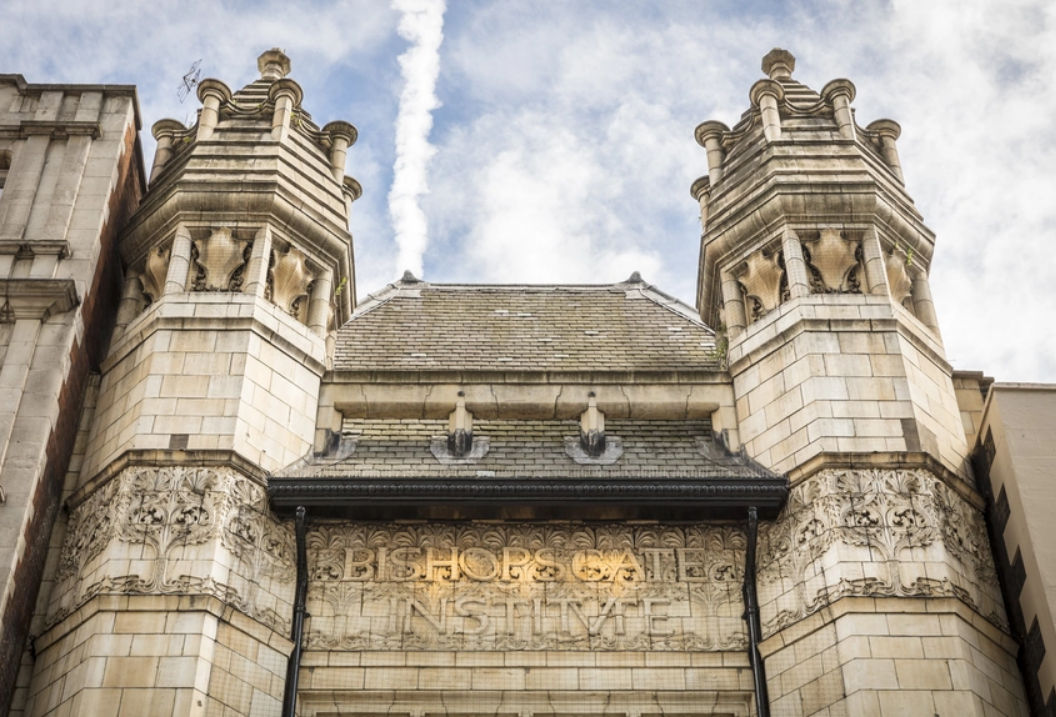
Calling up the courage to sign releases for the “Conversations with the Size Community” research archive project with Abigail Jaqueline Jones, I looked up the Bishopsgate Institute where our work will be archived.
Seeing so many queer, trans, and kinky ancestors archived in that historic place made me brave.
Thank you, Abigail, for seeing our size kink community and each of our individual voices as worthy of being witnessed, for making us part of the historical record.
Thank you for finding a place where our words, desires, and fantasies can rub shoulders with legends. I’m in awe.
Abigail wrote a bit about her research project in this recent thread on Bluesky.
I also talked a little about it in my essay “Stay Strong” last year. To reiterate, I don’t know of anyone doing research of this kind for people in our tiny corner of the world, and I think we are exceptionally lucky to have her. Just look at this:
This interview is part of a series examining the function of the erotic imagination in helping individuals with marginalised or non-normative anatomies, neurologies or neurotypes, gender identities or queer sexualities explore their relationship with their bodies, their brains, and their relationships with/perceptions of the world around them. Focusing upon size kink communities — consisting of individuals or collectives whose erotic fantasies predominantly involve giants/giantesses and tiny folk, superhuman growth or shrinking, or the particular expansion of certain body parts — this series explores how figures within this particular niche kink space have used the limitless creative potential of their erotic imaginations to empower themselves: to help accept, or even embrace and take pride in, their unique bodies and neurologies.
There’s something deeply reassuring about knowing you’re part of a long line of humans who have always been just as queer, trans, and kinky back then as people are now.
During Pride Month this year, a friend of mine mentioned that they didn’t feel like they belonged at Pride because they were struggling with mental health and didn’t feel proud at all on a personal level. I understand that thought, the reticence and vulnerability of it, and have compassion for how hard it is to physically step into a circle of others when your brain is lying to you about your own worth.
But how does the concept of pride change when you ask, “are you proud of the queer ancestors who fought so hard to gain rights and justice?” Then hell yes! I am endlessly grateful for our elders and all the generations that came before us, who paved the way for us to own who we are today. No matter what the future brings, I hope to be that for the people like us who come next, who are struggling with feelings of loneliness and how hard it is to trust that you’re worthy of love and belonging.
It’s much easier to start with pride in your community and ancestors and everyone coming together, and then build from there to work on finding your own individual role within that larger whole. (Devon Price has done some interesting work around topics like this in his 2024 book Unlearning Shame: How we can reject self-blame culture and reclaim our power.) Finding large and small ways to let go of the individualistic mindset has a lot of ripple effects. One of them is simply that there’s less pressure to be whatever we think we “should” be and trust that the right community can make space for who we already are.
That broader historical shift in perspective is community, too. No matter where we are or what our struggles are, we belong in the human story. I’m grateful to people like Abigail who fight to claim that right for us all.
(This blog post is based on this Bsky thread from five days ago. It was important enough to me that I wanted to document the sentiment here.)